
What lead-lined plasterboard is used for
An ordinary plasterboard sheet with a layer of lead bonded on at the factory. Instead of two jobs - the shield and the lining - there is one.
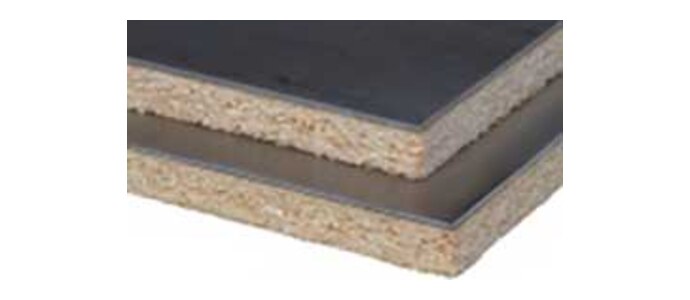
How the board is built
It consists of two main layers: the plasterboard sheet, which provides the basic structure, and a layer of lead bonded to its surface. The lead acts as a barrier - it absorbs ionising radiation and prevents it leaving the room.
From the installer's point of view the board behaves like ordinary plasterboard: it is screwed to the framing, filled and painted.
Where they are used
Primarily in construction, in rooms that require protection against ionising radiation - radiology suites, medical laboratories and X-ray rooms.
They protect medical staff and patients during examinations and treatment. They also go wherever scientific research or industrial processes involving radiation are carried out.
What to watch during installation
A shield only works if it is continuous. Every gap at a board joint, every uncovered screw and every service penetration is a place where radiation passes through.
That is why joints are covered with self-adhesive lead tape, screw heads get caps, and penetrations are sealed with lead wool. The layout of the boards and the required lead thickness are set out in the shielding design prepared by a radiologist - it is the design that states the Pb equivalent in millimetres.
Need the material, or some advice?
We will match the thickness and form of the material to the Pb equivalent in your design, cut it to size and ship it across Europe. For non-standard shapes a drawing or a .dxf file is all we need.
Request a quote Contact